
NATURE IN EXETER
Exeter's Blue Spaces
Blue spaces—coastal, river, lake, or pond environments—are directly linked to improved mental and physical wellbeing by reducing stress, boosting mood, and providing opportunities for physical activity. Environments near water encourage active behaviours like walking, running, swimming, and kayaking, which contribute to better cardiovascular health. Structured water-based group activities encourage social interaction and community building.
We are lucky to have the River Exe flow through the centre of Exeter as well as access to other blue spaces, some of which we will highlight here.
River Exe
The River Exe is a 60-mile (96 km) long river, rising in Exmoor (Somerset) and flowing south through Devon to reach the English Channel at Exmouth. It flows through Exeter, which is named after it, and features a significant, ecologically rich estuary for wildlife, alongside a popular 18km walking/cycling trail from Exeter to the coast.
The River Exe runs through the heart of Exeter as it makes it's way to Exmouth. You can enjoy sitting by the river at the Mill on the Exe pub. It is most exhilarating after heavy rains when the river is running high. Or on a calm summer evening when you can watch river slowly meander by and the bird life on the weir.

Exeter Quay
Exeter Quay has origins dating back to the Roman era (c. 45-75AD), but it became a significant trading hub following the completion of the Exeter Canal in 1566. The Quay was heavily expanded in the 17th century and again in the 1830s, with the iconic Custom House built around 1680.
Today's quay is a mix of cafes, restaurants, pubs and bars where you can enjoy good food, people watch and soak up the lovely atmosphere. Definitely a great place to spend a sunny afternoon.... and if it's not so sunny? Grab a table at one of the places inside and watch the world (and swans) go by.

Exeter Flood Relief
In October 1960, Exeter saw over 380mm of rain—half its yearly average. Heavy rainfall on 26 October caused the River Exe to rise, and by 27 October (“Black Thursday”), it flooded severely, particularly along the western bank from Exwick to Alphington, with St David’s Station also affected.
Work on a flood relief channel began in 1965 and finished in 1977. The most complex part, the Exwick spillway, uses a large gate near St David’s Station to divert excess water safely downstream.
Today, the channel forms a flat, scenic walking route from Exwick to Exeter Quay.

Exeter Ship Canal
The Exeter Ship Canal first opened to shipping in 1566 and was the first canal to be built in Britain since Roman times. It was also the first canal in England to use the pound lock. The Exeter Ship Canal runs for 5 miles from Exeter Canal Basin to Turf Lock on the River Exe.
There are lovely flat walks along the canal, starting at the Canal Basin at Exeter's historic quayside, via Double Locks and Topsham Lock Keepers Cottage to The Turf. Details of this walk can be found here.
Exeter City Council have a self-guided canal walk with a downloadable leaflet here.

FLOW Exeter
FLOW runs along the River Exe, the spine of our city, through Riverside Valley Park. It follows a route of around 5km from Exwick Mill Field down to Double Locks.
FLOW came into being as part of an artist residency which coincided with the re-landscaping of Riverside Valley Park following substantial flood relief engineering works. The project was led by artist, designer and educator, Anne-Marie Culhane working with people from Exwick, St. Thomas and wider Exeter.
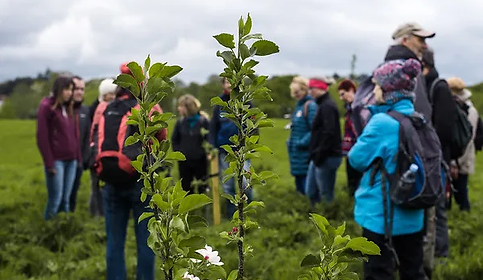
Around 200 trees have been planted, many by local people. People in Exeter continue to care for the route as it grows.
Ponds & Watercourses, University of Exeter
Exeter University’s Streatham Campus benefits from a varied landscape, with higher ground near the Sports Park and lower levels toward Prince of Wales Road, offering ideal conditions for water features. Reed Pond, the original feature, was created as part of the Veitch-designed setting around Streatham Hall (now Reed Hall) and continues to be a well-loved ornamental feature.
The Taddiforde Brook runs along the campus boundary and supports diverse wildlife, including otters. In addition, three man-made water features—The Plantation, the Taddiforde Ponds, and the Hoopern/Business School Ponds—use the site’s topography to help define the estate’s landscaped structure.
The University grounds are open for the public to visit.

Topsham
The quaint historic estuary port of Topsham has a cosmopolitan atmosphere with an eclectic cluster of specialist shops and fine restaurants, plus wonderful sunsets above the estuary. Once a thriving port and shipbuilding centre, Topsham still retains a strong maritime flavour.
The narrow Goat Walk beside the Exe estuary offers wonderful views and sunsets. These estuary mudflats and Bowling Green Marsh RSPB Reserve are home to a vast array of water-birds including avocet, dunlin, little ringed plover, and little egret.
Topsham's charming passenger ferry deposits passengers (and bikes) across the Exe for pleasant walking and pub lunches at two idyllic waterside pubs, The Turf and Double Locks. You can also take short or long cruises to discover the wildlife of the Exe estuary or to Exmouth's sandy beaches.

Outside Exeter
If you fancy getting out of Exeter, then there are easy ways to get to blue spaces using public transport. The River Exe eventually arrives at the sea at Exmouth Estuary, which is easily accessible by train. There are also direct trains from Exeter to Teignmouth, Dawlish, Torquay and Paignton. if you can get up onto Dartmoor, there are river, reservoirs and wild swimming spots.
Canals
The Grand Western Canal Country Park and Local Nature Reserve is popular for walking, cycling, paddling and horse-drawn barge trips.
Rivers
The River Dart (rising as East and West Dart) gives the moor its name. Other major rivers include the Taw, Tavy, Avon, Bovey, and Plym.
Reservoirs
Major reservoirs providing water include:
-
Burrator Reservoir (popular for walking and cycling)
-
Meldon Reservoir (known for its scenic, high location)
-
Fernworthy Reservoir (located near Teignhead)
-
Tottiford, Trenchford and Kennick (three reservoirs to the east)
-
Venford Reservoir (close to Venford Falls)
Wild Swimming Spots
-
Spitchwick Common (popular for swimming in the River Dart)
-
Sharrah Pool (a long, deep pool in Holne Woods popular for swimming)
-
Foggintor Quarry (a swimmable former quarry)
-
Tavy Cleave (a wild swimming spot on the west side)
Waterfalls
-
Canonteign Falls (highest waterfall in SW)
-
Becky Falls (a rare temperate rainforest)
-
Lydford Gorge (deepest river gorge in SW with 30m high waterfall)

