
NATURE IN EXETER
Exeter's Green Spaces
Green spaces—parks, woodlands, and gardens—are essential for wellbeing, offering significant mental and physical health benefits, including reduced stress, lower blood pressure, and improved mood. Spending at least two hours a week in nature boosts mental health, increases life satisfaction, and supports social cohesion. High-quality, diverse, and accessible natural environments are linked to lower anxiety, better childhood development, and increased physical activity.
Exeter boasts over 85 parks and green spaces, ranging from small play areas to major parks and six Valley Parks, amounting to over 250 acres of public open space, accounting for about 9.5% of the city's land.
Exeter's Parks
Exeter is a green city, with peaceful parks and beautiful, historical gardens to be found around every corner. Here we highlight the main ones, but you can find a park or play area using Exeter City Council's website here.
Belle Isle Park
Opened in 1992, Belle Isle is Exeter's newest park. With a view of Trews Weir Allotments and a placid River Exe, the park is a favourite spot for lunchtime picnicking and casual bird watching. Herons, cormorants, woodpeckers, and swallows are regular visitors. The park can be easily reached by foot or bicycle, from the River Exe suspension bridge or from Topsham Road via Trew's Weir Reach. Bus routes from the City Centre include the K and T.


Belmont Park
Belmont Park (also called Belmont Pleasure Grounds) was opened to the public in 1886 as a children's play area and subsequently enlarged for the use of the general public. The park is bounded by Belmont Road, Blackboy Road, Gordon Road, Jesmond Road, Grosvener Place and Clifton Hill. The Newtown Community Association, Exeter Scrapstore and Belmont Bowling Club are all located at the park. There is a large dog-free zone with equipment for younger and older children.


Bull Meadow Park
Bull Meadow Park in St Leonard's was designated as Recreation and Pleasure Ground in 1889 before it was extended in 1926. The park features picnic areas, 5-a-side goals, a large play area and a number of mature trees. Bat boxes, a wild flower meadow and ornamental planting also make Bull Meadow a popular destination for local wildlife. The park is accessible by foot or bicycle, from Magdalen Street or from Temple Road via Roberts Road.


Bury Meadow Park
Situated between the University of Exeter's Streatham campus and the city centre, Bury Meadow was opened to the public in 1846. It is famous for a cholera plot that was a burying ground for victims of the 1832 cholera outbreak. Today, the park features a kids' play area equipped with climbing equipment, a wooden activity trail and open parkland. It offers scenic walking paths and well-maintained grounds, ideal for relaxation or casual picnics.


Heavitree Pleasure Ground
Heavitree Pleasure Ground was opened in 1906 by the Heavitree Urban District Council. Originally designed by Veitch Nurseryman FW Meyer, the site was intended to be used for community recreation. Today the park features facilities for picnicking, skateboarding, basketball, BMX, tennis, bowls and play, making the pleasure ground a favourite family day out.


Northernhay Gardens
Northernhay Gardens in the city centre was quarried for stone in Roman times to build the city walls and later formed part of the Norman castle defences. The site includes a substantial section of Roman wall and the only surviving stretch of Saxon town wall in England, giving it historic importance. It was laid out as a public park in 1612 but was destroyed during the Civil War when new defensive ditches were dug in 1642. The park was restored from 1664 and has been maintained as a key city amenity ever since.


Rougemont Gardens
Grade II listed in the National Register of Historic Parks and Gardens, Rougemont Gardens were originally part of the defences of Exeter Castle. They were converted into gardens in the late 18th century, and purchased by the city council in 1912. Incorporating the major historic features of the Roman city wall and ditches of William the Conqueror’s Castle, they are Exeter's hidden gem in the centre of the city.


St Thomas Pleasure Ground
St Thomas Pleasure Ground, was opened as 'St Thomas People's Park' on 30 March 1891. The four acre park was initially designed as a safe play space for local children and incorporated tennis courts until 1960. The paddling pool was first opened in 1938. The park is easily accessible by foot or bicycle from Cowick Street or Maple Road.


Exeter Valley Parks
Exeter's Valley Parks offer ample opportunities to experience wildlife and natural, open spaces. There are six Valley Parks framing the city which are now looked after for people and nature by Devon Wildlife Trust, following their transfer from Exeter City Council to DWT in May 2019.
Barley Valley Park
Further details here. Barley Valley Park has a patchwork of woods and meadows for you to explore. This western ridge line of the city has splendid rural valleys and offers excellent views of the city. A network of footpaths and bridleways lead to and from the Valley Park allowing you to extend your visit and explore the farmland fringes of Exeter. Did you know, a German bomber crashed in the reserve during the bombing raid on Exeter in WW2?

Duryard & Belvidere Valley Park
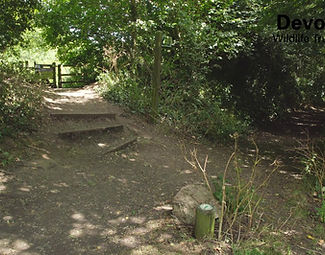
Further details here. Two sites to explore over 11 hectares near the University of Exeter, with some very long views and peaceful meadow walks in a local nature reserve. Did you know, Duryard was once a Royal Saxon deer park. (dur meaning deer and yard meaning hunting area)?


Ludwell Valley Park
Further details here. The park is a working farm on the edge of the busy city of Exeter. Many of the fields provide free access to people wishing to enjoy this tranquil setting. Next to the farmland is Wonford Playing Fields where there is space to kick a ball around, jog or take a leisurely stroll beside the Northbrook. The valley is a real wildlife haven. Harvest mice nest in the fields, whitethroats and blackcaps skulk in the hedgerows and orange-tip and painted lady butterflies feed on the wildflowers.


Mincinglake Valley Park
Further details here. Stream side and wooded walks, meadows and parkland. Part of the Valley Park was created from a former waste tip, capped in the 1970s! It has some hillier walks too, with long views towards the estuary. Did you know, Mincinglake comes from the old English words for ‘Nun’s lake’ a reference to the ‘Greater Polsloe Pond’, a lake created when the St. Katherines Priory nuns dammed the stream in the 12th century?


Northbrook Park
Further details here. Northbrook Park was the former location for an approach golf course which closed in 2019. The land occupies a strategically important location, linking Ludwell and Riverside Valley Parks. Our proposal for the park is to create a wild arboretum, supporting community orchards, a wilder, healthier stream, and an activity hub; all of which will support community’s active involvement in the future of the park.


Riverside Valley Park
Further details here. Its 40 hectares sit between Clapperbrook Lane and Bridge Road. This is an easy Valley Park to visit: it is close to the city centre and just a short walk from the historic Quayside. It offers river views, excellent walking and cycling paths and flood plain meadows giving way to the wilder estuary.


Whitycombe Valley Park
Further details here. At just one hectare, this small site is worth a visit to see some pristine meadow and a seldom seen view of the city. There is a a short and scenic hike up to the top where there is a bench overlooking the city.


Exeter Green Circle
The Exeter Green Circle is a twelve mile walk that provides a great walking experience within the boundaries of Exeter—from green countryside valley parks to the pavements of quiet leafy suburbs.
The walk is made up of the following five sections:
You can download the whole route map by clicking the image to the right.
Or follow the links above to the individual sections and you can download maps just for those sections.
Each section map has a key, a QR code for more information and points of interest to look out for on that individual section.

Strava Exeter Green Circle Walks
We've come up with some Strava walking routes around the Exeter Green Circle to make it easier to navigate. You can sign up for the Strava app for free.

Lower Hoopern Valley
Lower Hoopern Valley is a steeply sided, 38-acre plot of land to the south of Streatham campus at the University of Exeter. The space has been identified as an area of opportunity for enhanced biodiversity, community use and research activity and is a designated County Wildlife Site. The valley is a habitat for various animals, including birds, insects, and mammals, making it a valuable space for nature study. The Friends of Hoopern Valley group, along with the University, organises volunteer activities such as tree planting, nature walks, and community events to encourage stewardship of the area. You can download a self guided walk here.


Sound Trail, University of Exeter
Enjoy this Biodiversity Sound Trail, which combines factual information about the nature and wildlife around Reed Hall on the University of Exeter campus, with poetry written and recorded by students. In 2023, students worked with award-winning eco poet Sean Borodale, on a poetic response to the natural surroundings and this was then combined with the ambient sound around Reed Hall: birds, people, wind and running water. The trail focuses on trees and the life within them (there are over 10,000 trees from six continents on the University grounds and 133 Champion Trees).


University of Exeter Botanic Garden
The University of Exeter Botanic Garden is officially recognised as an Accredited Botanic Garden by Botanic Gardens Conservation International (BGCI). The 141-hectare academic campus functions as an integrated botanical landscape woven directly around the university buildings. Original plantings trace back to the 1860s and 1870s when the estate around Streatham Hall (now Reed Hall) was laid out by the famous Exeter-based Veitch family of nurserymen. The site contains over 10,000 trees including a historic Victorian arboretum at Reed Hall, Birks Bank, and a massive collection of Magnolias and Cornus in Taddiforde Valley. The outdoor grounds are open to the public 24 hours a day, offering a continuous green space blending modern architecture with historic trees.

